
Need an installer?We made it easy for you.
Listed installers are independent contractors, not MBTEK employees. They're skilled professionals familiar with our products and capable of efficient installation.
1 / 14
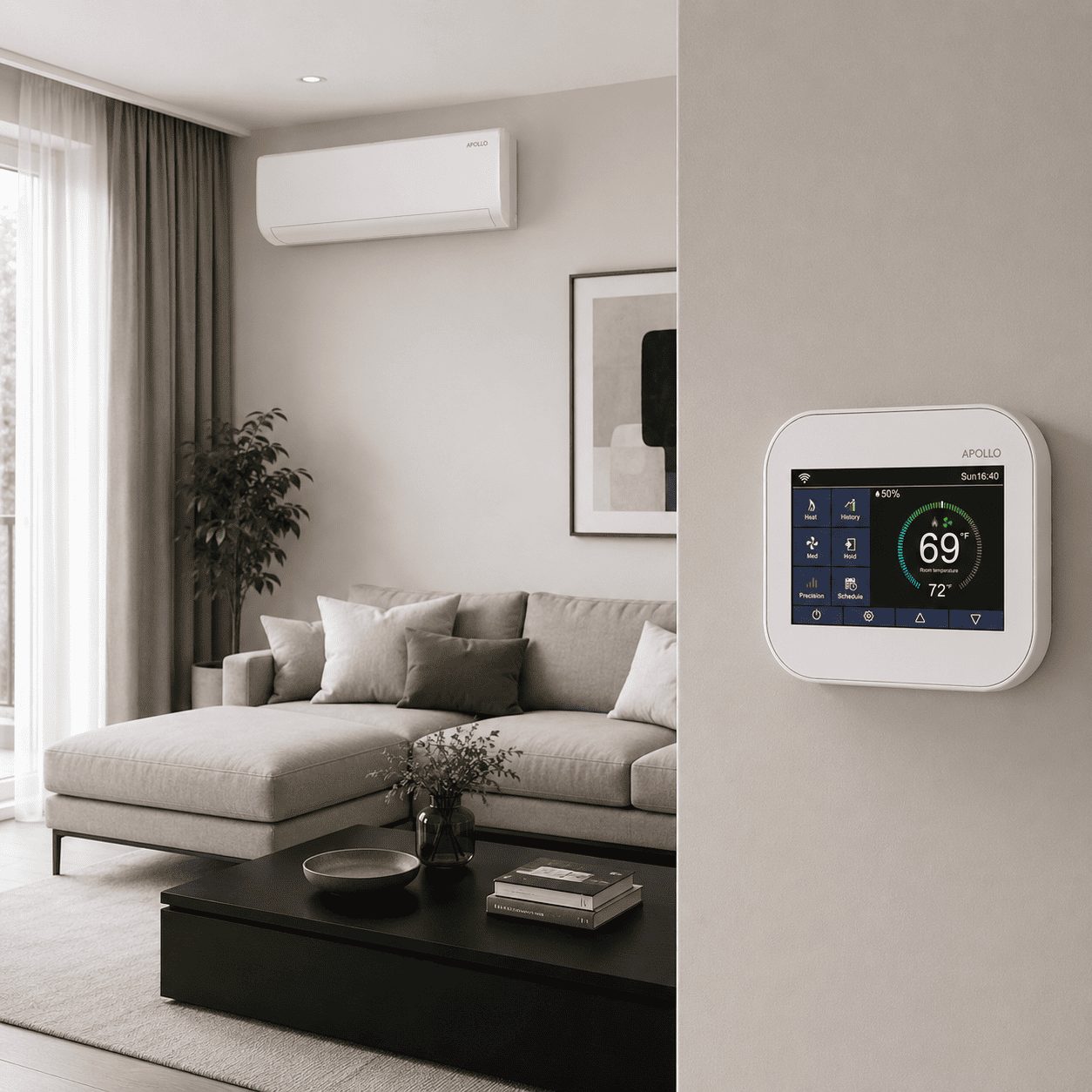
Wi-Fi Thermostat — Fan Coil Zone Control
Application-specific hydronic and HVAC control with touchscreen, app, BACnet, and MQTT connectivity.
Shipping$80Free
Need help choosing?
Installed in real homes and workshops
Upgrading standard dial thermostats to advanced Wi-Fi enabled digital thermostats for better energy tracking and remote access.
Complete Control with MBTEK Thermostat
SMART HOME • UPGRADE
Wi-Fi fan coil thermostat for 2-pipe and 4-pipe FCU systems, combining touchscreen control, remote access, and advanced fan or valve modulation for residential and commercial comfort control.
Replace 120V Honeywell T6570, T6069, T6169, TB6575A, TB6575B, TB6575A1000, T6575D, T6575C, T6574B
Replace 12 to 24VAC/DC Honeywell T8570, TB8575A, TB8575A1000, T8574B, T8575C, T8575D
Replace 12 to 24VAC/DC Coleman Rv Camper Mach Thermostat 7330G3351, 6636-3441, 7330F3852, 8330-3362, 9430-3372
| Controls | 2-pipe or 4-pipe FCU with 2- or 4-speed fan |
|---|---|
| Sensor | Built-in ambient light and humidity |
| Relay / power | 5A SPST-NO / 12–24VAC/DC or 110–240VAC |
| Connectivity | 2.4GHz Wi-Fi, BACnet MSTP/IP, MQTT |
| Retrofit compatibility | Honeywell TB6575/TB8575 SuitePro, PECO, Johnson Controls, Siemens FCU controls |
Complete the system
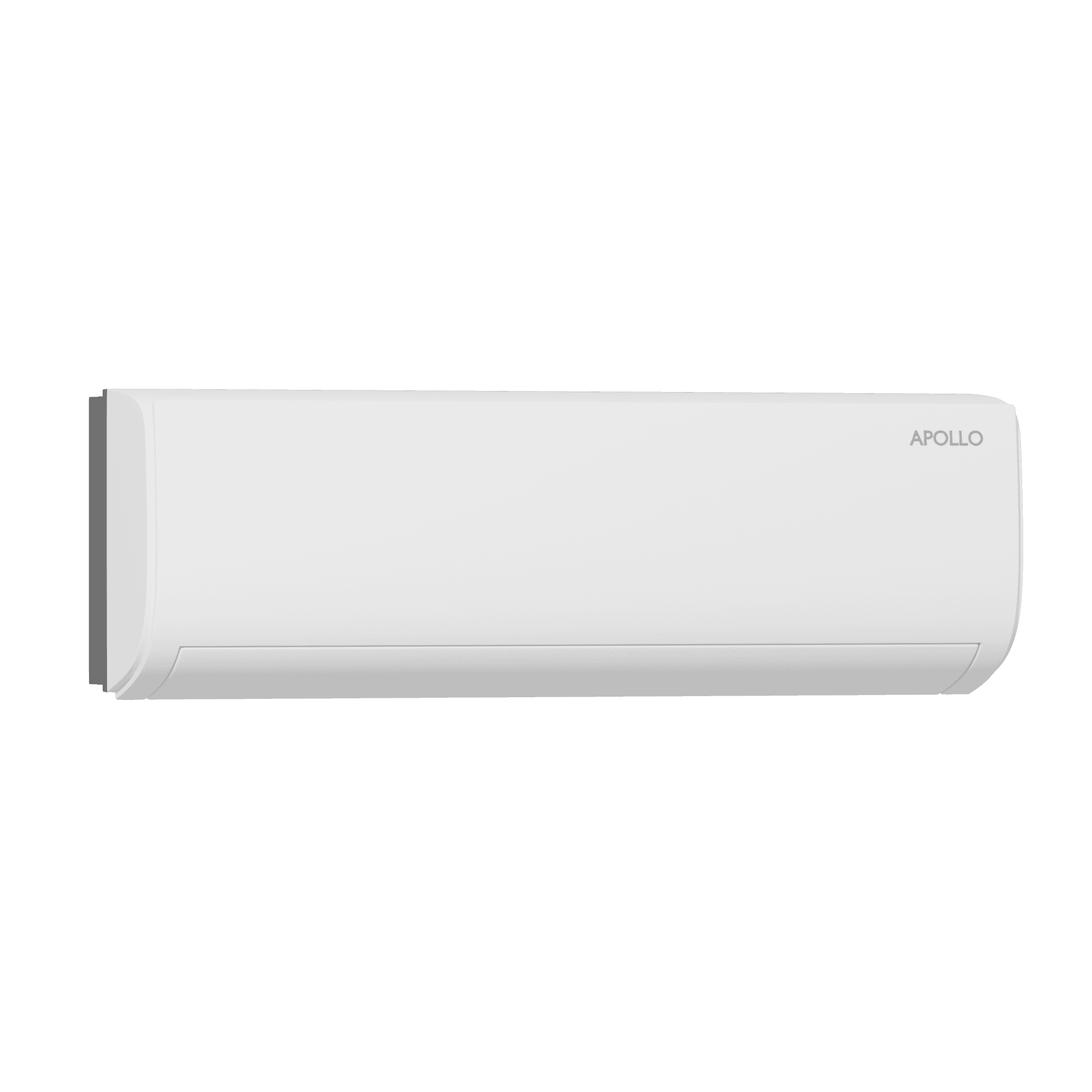
What this thermostat controls
Wall, concealed, ceiling, or floor — this thermostat controls any of our fan coil units. Pick the style that fits each space.
View details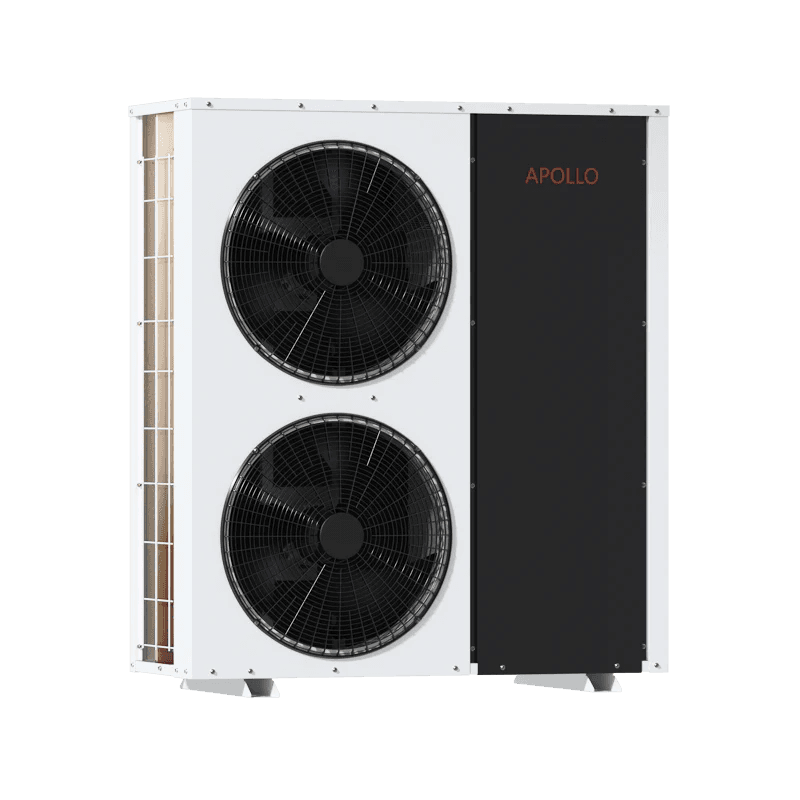
APOLLO Heat Pump
Fan coils need hot or chilled water to run. Our Apollo air-to-water heat pumps supply that water — heating in winter, cooling in summer.
View details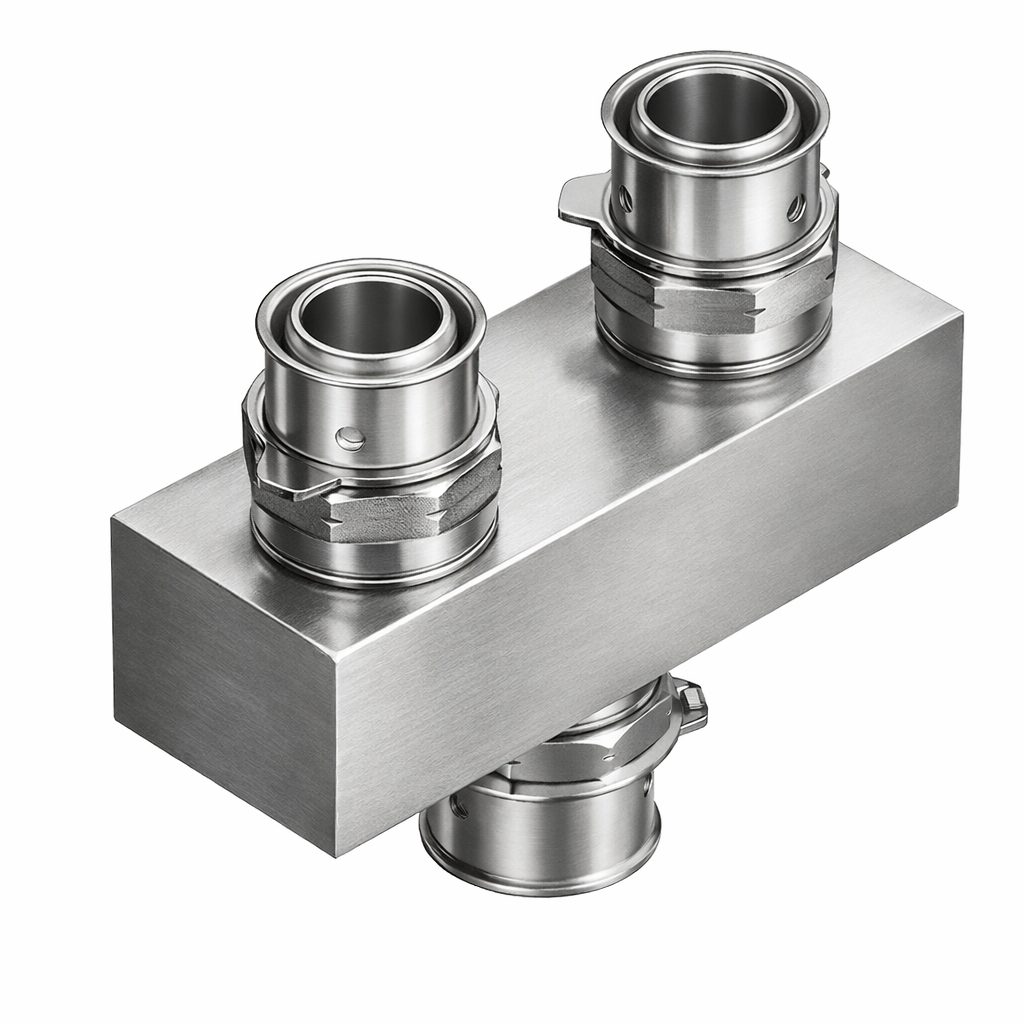
Multi-zone install
The Y-connector lets two fan coil units share a single heat pump circuit, expanding whole-home coverage without a second outdoor unit.
View detailsBeyond this system
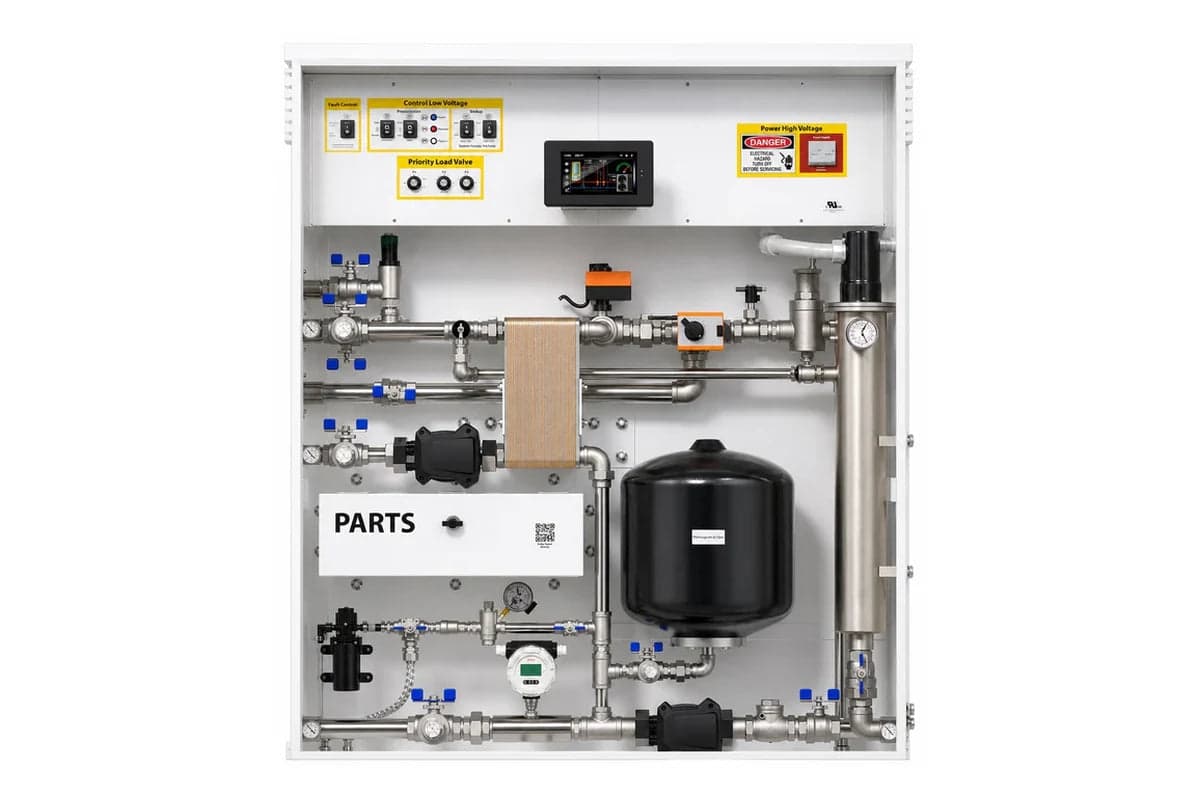
Hydro Station
Combines pump, controls, and electric backup into one compact wall station — less loose parts, faster install, cleaner mechanical room.
View details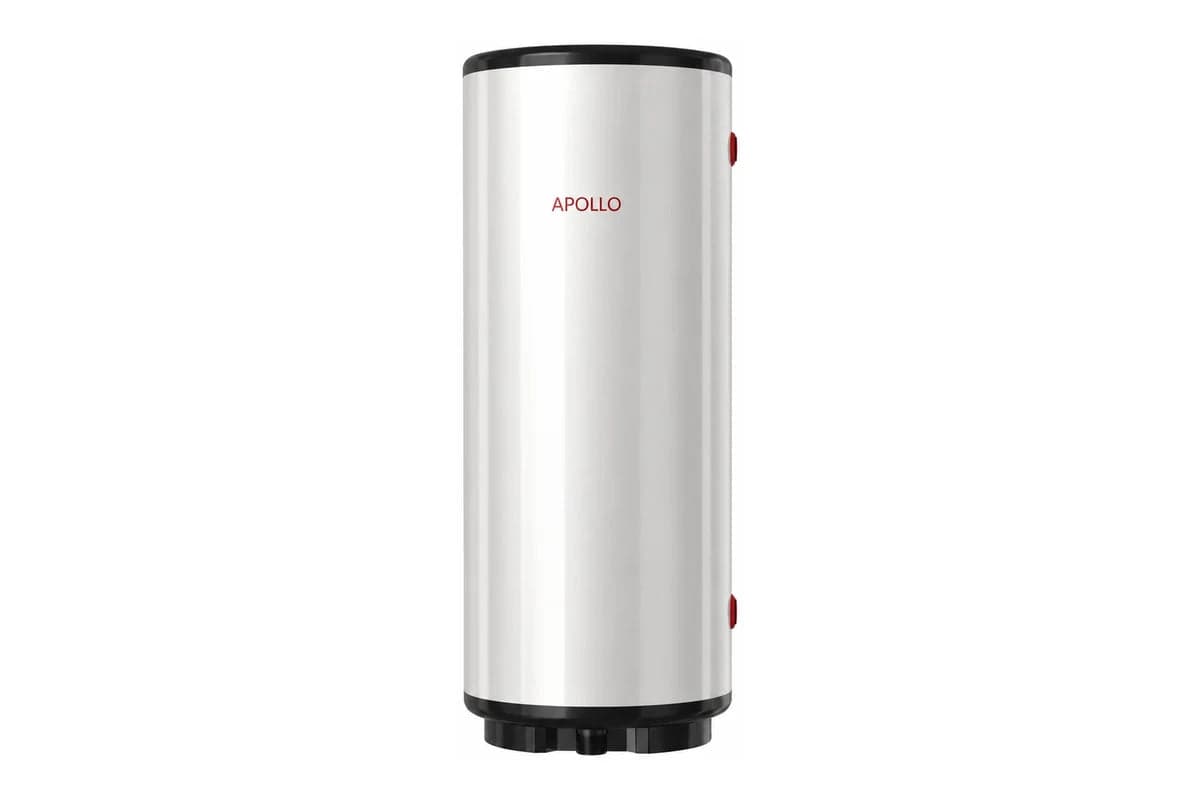
Water Heater Tank
The combined buffer and indirect tank lets the heat pump supply household hot water with no separate water heater needed.
View details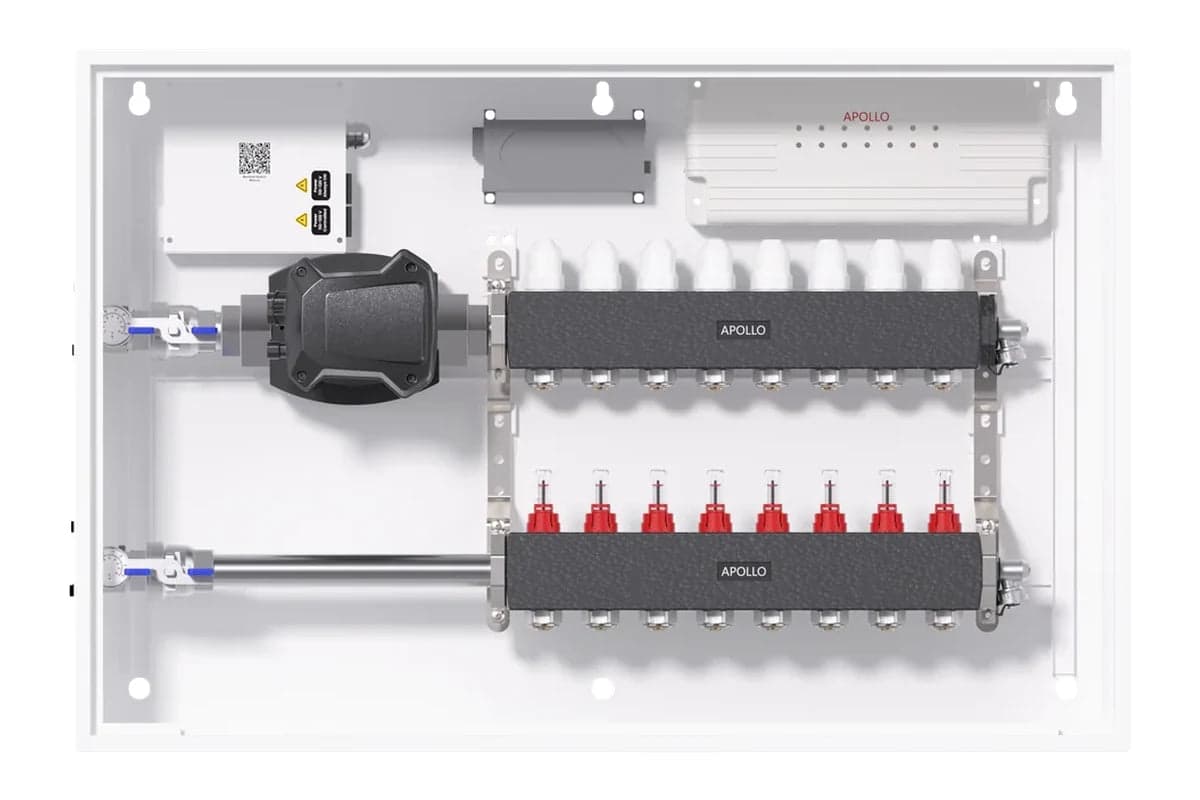
Manifold Station
Distributes warm water evenly to each radiant floor loop. Fan coils and radiant can both run from a single outdoor unit.
View detailsAnswers
A fan coil thermostat controls a fan coil unit (FCU) — a hydronic air handler that uses hot or chilled water to heat and cool a room. Unlike a standard residential thermostat that simply signals a furnace or AC on or off, an FCU thermostat must control multiple fan speeds (low, medium, and high) and switch heating and cooling valves independently. It also needs to operate at the low voltages common in FCU wiring (12–24VAC/DC), rather than the line voltage used by electric baseboard heaters. The APOLLO Wi-Fi Fan Coil Thermostat is purpose-built for this: it handles 2/4-speed fan coil unit control, supports both 2-pipe and 4-pipe hydronic configurations, and adds Wi-Fi remote access and scheduling on top.
Yes. The APOLLO Wi-Fi thermostat supports both 2-pipe and 4-pipe fan coil unit configurations. In a 2-pipe system — the most common setup in residential and condo buildings — the same supply and return lines alternate between hot and chilled water depending on the season, and the thermostat switches between heating and cooling modes accordingly. In a 4-pipe system, separate heating and cooling coils run simultaneously, allowing the thermostat to call for heating or cooling independently at any time of year. Both configurations are supported under the same wiring terminal block.
Yes. The APOLLO Wi-Fi thermostat is rated for 2/4 fan coil unit control, covering fan coil units with two, three, or four fan speed outputs. The thermostat selects fan speed automatically based on how far the room temperature is from the setpoint — running low speed for light conditioning and stepping up to medium or high when the space needs to recover faster. This tiered fan control reduces noise during normal operation and only calls for maximum airflow when needed.
The APOLLO Wi-Fi Fan Coil Thermostat accepts both low-voltage and line-voltage power: 12–24VAC/DC (the standard in most commercial and residential hydronic fan coil installations) and 110–240VAC for locations where only line voltage is available at the thermostat. This dual-voltage design means you can install it with your existing wiring in most cases — no additional transformer or rewiring is required. Relay contacts are rated at 5A maximum per relay (SPST-NO), which covers the control outputs for fan speed and valve switching on virtually all standard fan coil units.
The APOLLO thermostat connects to your 2.4GHz home or building network using IEEE 802.11 b/g/n with WPA/WPA2 security. Once connected, the companion app lets you adjust the setpoint, switch between heating and cooling modes, change fan speed, view the current room temperature and humidity, and update 7-day schedules — all from your phone. GEO-fence mode uses your smartphone's location to automatically set back the temperature when you leave and restore comfort before you return. The thermostat also supports wired BACnet MSTP and BACnet/IP for integration into building management systems, plus MQTT and Google Home for voice-based monitoring.
In most cases, yes. The APOLLO thermostat uses an industry-standard FCU terminal block layout compatible with the same wiring conventions used by Honeywell TB6575, TB8575 SuitePro, PECO, Johnson Controls, Siemens, and other major fan coil thermostats. Label and photograph your existing wiring before removal, then match the terminals on the APOLLO. The product manual — available for download on this page — includes a full wiring diagram covering 2-pipe and 4-pipe configurations. For fan coil units using BACnet control rather than direct relay switching, the APOLLO also supports wired BACnet MSTP over RS-485.
No. Nest, Ecobee, and similar mainstream smart thermostats are designed for single-speed forced-air systems (gas furnaces and central air conditioners) and do not natively support multi-speed FCU fan control, 2-pipe or 4-pipe valve logic, or the low-voltage wiring conventions used by fan coil units. Installing a standard smart thermostat on an FCU typically results in only one fan speed working or incorrect heating and cooling behavior. Honeywell's TB6575 and TB8575 SuitePro models are among the few conventional alternatives built specifically for fan coil units, but they lack Wi-Fi and remote app access. The APOLLO Wi-Fi Fan Coil Thermostat is purpose-built for FCUs and adds the smart connectivity those models cannot provide.
The APOLLO thermostat platform covers several hydronic and electric heating applications. In addition to the Fan Coil Unit thermostat, the same hardware family includes dedicated models for radiant floor heating, boiler control, pool and spa aquastat (water temperature control), snow melt systems, and electric baseboard or forced-air heaters. Each model is pre-configured for its specific application — select the right model from the dropdown at the top of this page. If you are building a multi-zone system with an air-to-water heat pump driving both fan coil units and radiant floor circuits, different APOLLO models can be used for each zone type within the same installation.
A programmable fan coil thermostat stores a fixed weekly schedule — typically 5-2 day or 7-day — and runs without any external connection. It is reliable and simple, but adjusting the schedule requires physical access to the thermostat. A smart Wi-Fi thermostat like the APOLLO adds remote app control so you can change setpoints or schedules from anywhere, GEO-fence automation that adjusts temperature based on your phone's location, and BACnet/MQTT connectivity for building management system integration. For most residential and light-commercial fan coil installations, the smart Wi-Fi model delivers noticeably better comfort and energy management without adding installation complexity.
Verified Google reviews from MBTEK customers across our heating and hydronic product lines.
Loading reviews…
Need an installer?We made it easy for you.
Listed installers are independent contractors, not MBTEK employees. They're skilled professionals familiar with our products and capable of efficient installation.
Any questions?Reach out to us.
Our team can help with product questions, sizing guidance, and next steps.