icon
Affiliate Program

BUY ANY 3 ITEMS, GET 30% OFF Free Shipping

INDOOR WOOD PELLET HEATING, Built to Last

Indoor Pellet Boilers

High-efficiency wood pellet boiler systems for hydronic heating, domestic hot water support, and central heating applications in homes and commercial buildings.

Indoor systems | Hydronic heating | Complete systems

Choose your pellet boiler

Find the right pellet boiler for your project

Compare compact residential pellet boilers, larger automatic Pellet Duo systems, and industrial-scale pellet boiler platforms for hydronic heating.

Sizing guide

Compare Pellet Boiler Models by Coverage

Square-footage ranges are approximate. Final sizing depends on heat loss, insulation, climate, buffer tank design, venting, and how the boiler will be used.

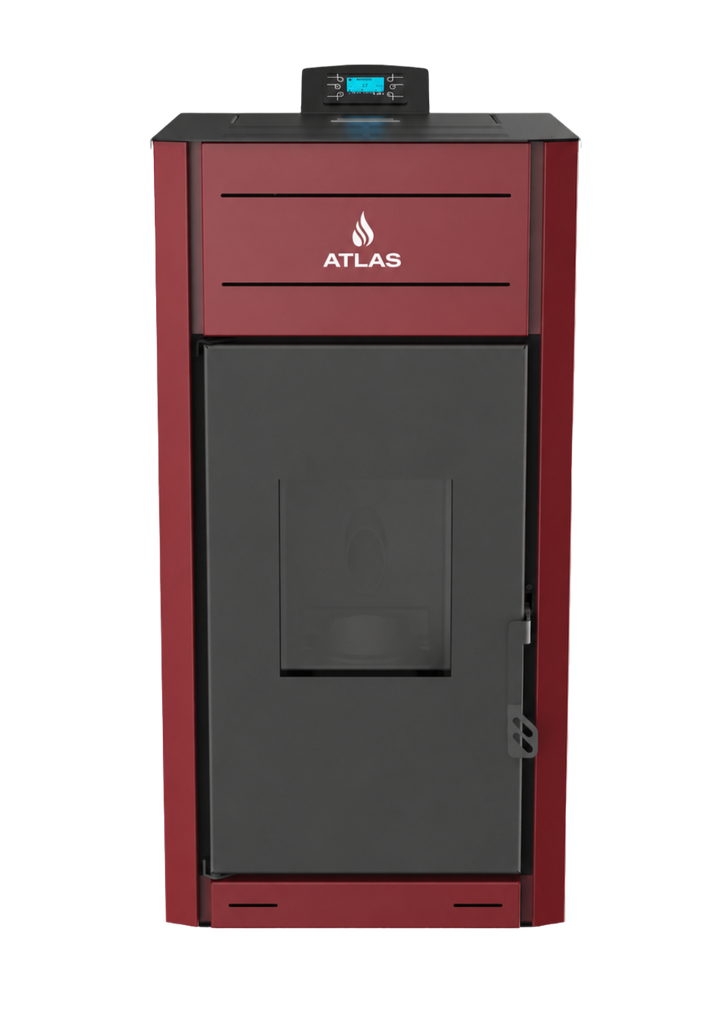
ATLAS Pellet Boiler

Series
Model
Approx. coverage
ATLAS
Up to 2,250 sq ft
ATLAS
Up to 4,400 sq ft

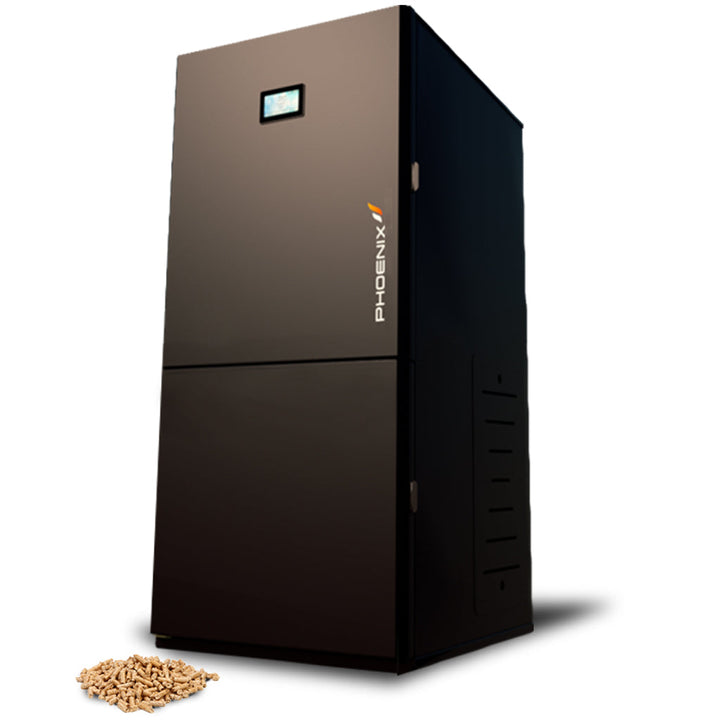
Phoenix Pellet Boiler

Series
Model
Approx. coverage
Phoenix
Up to 2,500 sq ft
Phoenix
Up to 4,500 sq ft

Pellet Duo

Series
Model
Approx. coverage
Pellet Duo
Up to 3,000 sq ft
Pellet Duo
Up to 6,200 sq ft
Pellet Duo
Up to 12,000 sq ft

Pellet Duo Industrial

Series
Model
Approx. coverage
Pellet Duo Industrial
Up to 15,000 sq ft
Pellet Duo Industrial
Up to 30,000 sq ft
Pellet Duo Industrial
Up to 55,000 sq ft
Pellet Duo Industrial
Up to 110,000 sq ft

For large or mixed-use buildings, confirm final sizing with MBTEK before ordering.

What is an indoor wood pellet boiler?

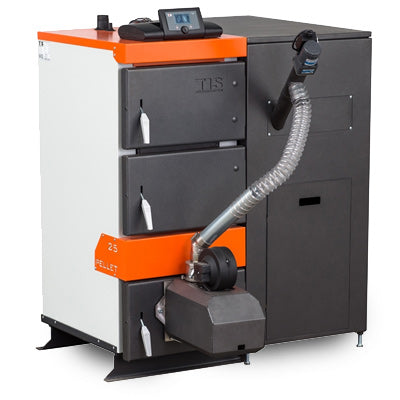
An indoor wood pellet boiler is an automatic central heating boiler that burns compressed wood pellets to heat water for hydronic systems. An auger feeds pellets from a hopper into the burn chamber on demand, and the boiler transfers that heat into water for radiant floors, fan coils, domestic hot water support, workshops, farms, and building heat.

The indoor part matters because the boiler is planned as mechanical-room equipment with venting, piping, pumps, controls, protection valves, and thermal storage. It is selected as a complete hydronic system, not as a room heater, and its automatic fuel feed makes it closer to a gas or oil boiler in day-to-day use than to a hand-fired appliance.
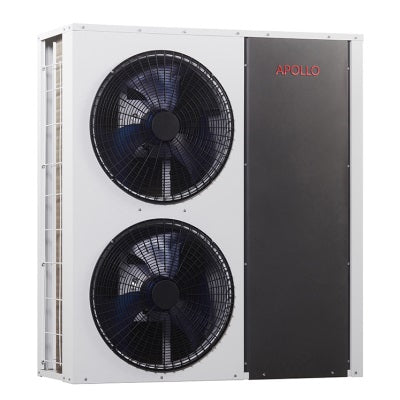
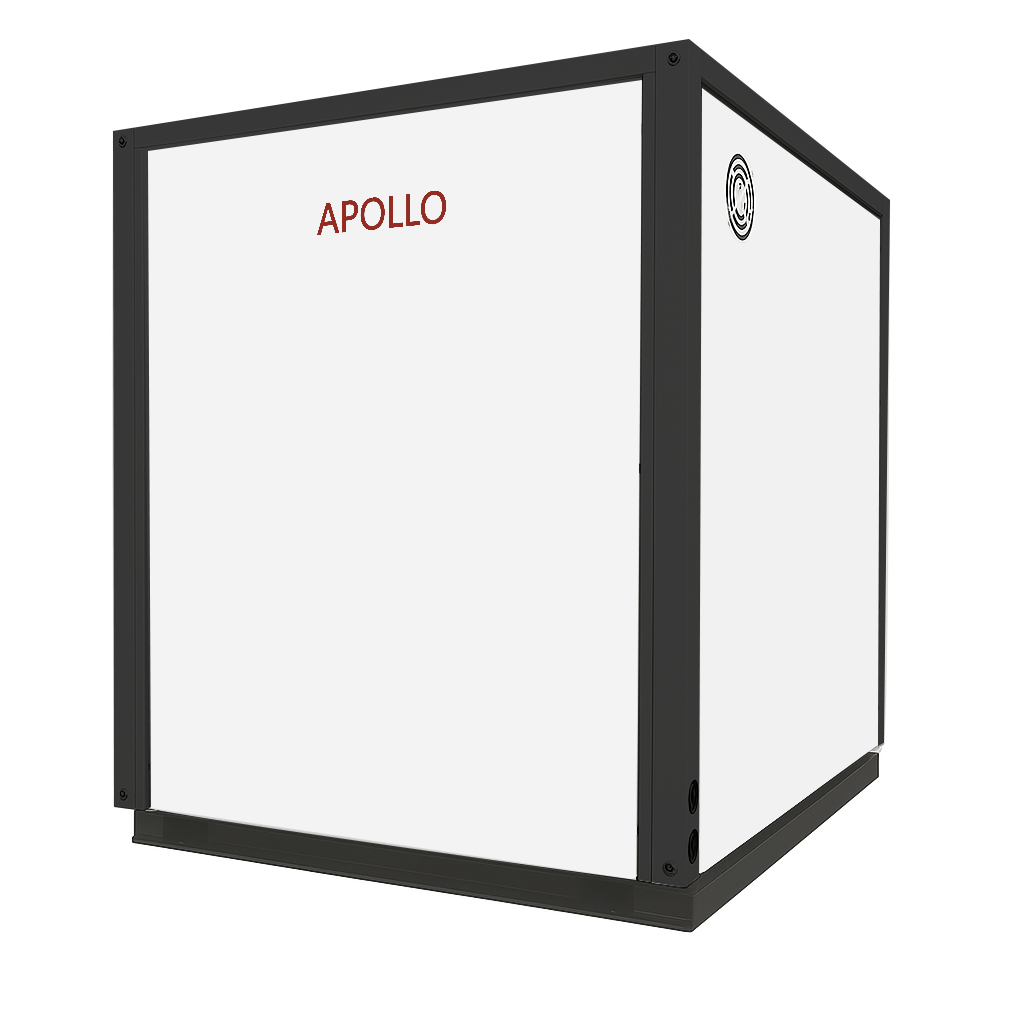
MBTEK indoor pellet boilers for hydronic heating

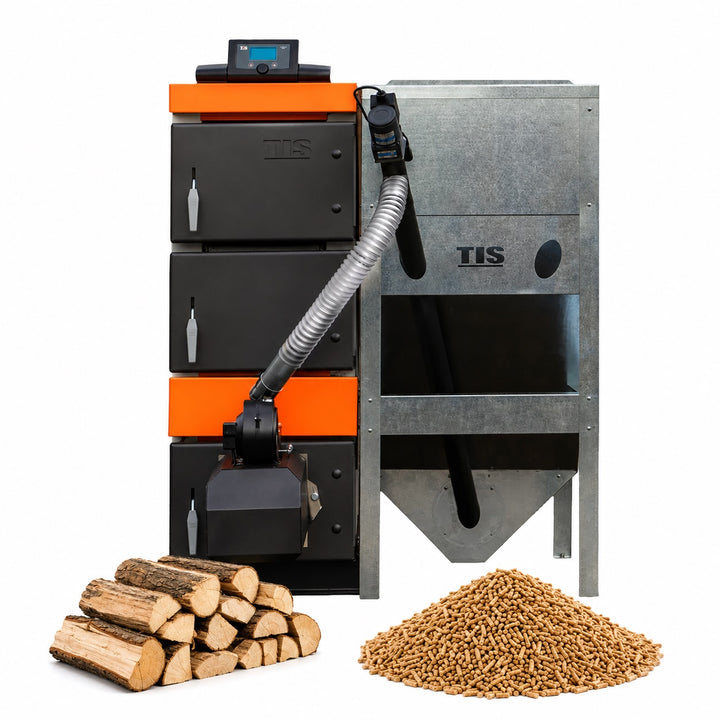
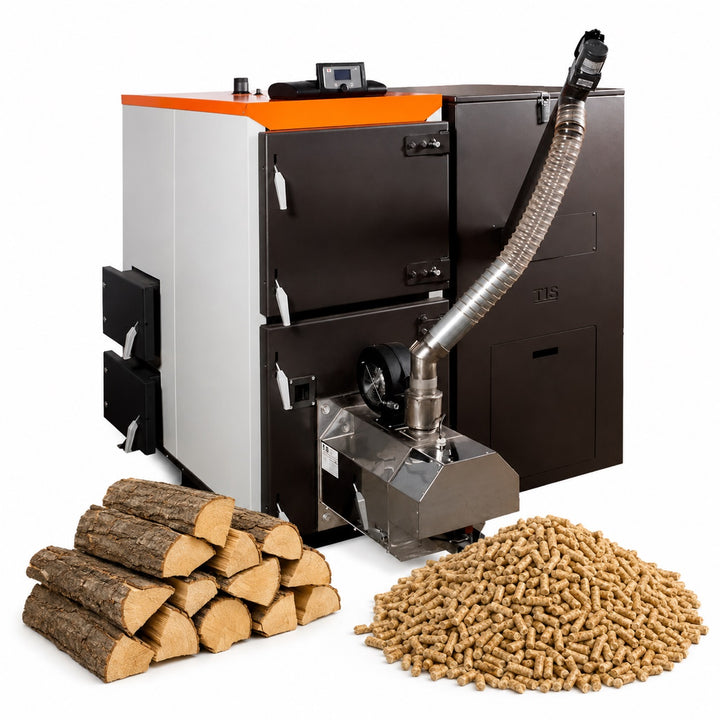
MBTEK indoor pellet boiler systems are built around hydronic heat distribution and automatic pellet feed. ATLAS is the compact, appliance-style boiler for homes and light commercial spaces, Phoenix adds a large built-in hopper with self-cleaning support and app-ready control, Pellet Duo delivers higher output with multi-fuel flexibility, and Pellet Duo Industrial scales up to commercial and industrial heating loads.

A complete system can include a buffer tank, boiler protection valve, circulator pumps, controls, radiant floor loops, fan coils, air handlers, and an indirect tank for domestic hot water. The product picker and sizing tables above keep those boiler links close to the top so buyers can move from research to model selection quickly.

Pellet boiler vs pellet stove

Pellet boiler

A pellet boiler is a hydronic central heating appliance. It heats water and sends it through the building to radiant floors, fan coils, radiators, and a domestic hot water tank, so one boiler can heat an entire home or commercial space. This page covers indoor pellet boilers.

Pellet stove

A pellet stove is a room heater that warms the air in the space where it sits. It does not feed a hydronic system or domestic hot water. If you need whole-building heat through water, a pellet boiler is the right product, not a stove.

Pellet boiler vs gas, oil, or propane boiler

A pellet boiler runs on renewable wood pellets instead of natural gas, oil, or propane, which can lower fuel cost and carbon footprint where pellets are readily available. MBTEK pellet boilers operate at up to 96% efficiency depending on the model, with automatic fuel and airflow modulation that keeps day-to-day use close to a conventional fossil-fuel boiler.

The tradeoffs are pellet storage and fuel handling: pellets need dry storage and periodic restocking, and ash must be managed. In return you get a high-efficiency, automatic boiler that can replace or supplement an oil or propane system on the same hydronic loop.

Whole-house heating and hot water with a pellet boiler

A correctly sized pellet boiler can heat an entire house and support domestic hot water. The boiler ties into the hydronic system, and an indirect tank uses boiler heat to produce domestic hot water alongside space heating.

A buffer tank is often part of a whole-house plan because it stores heat, smooths out demand, and reduces boiler cycling. Large hoppers on Phoenix and Pellet Duo models give several days of autonomy between refills, which keeps a whole-house system practical to run.

Sizing, buffer tanks, and installation basics

Square footage is only a starting point. Final pellet boiler sizing should account for heat loss, climate, insulation, ceiling height, air leakage, domestic hot water demand, radiant or fan coil loads, and whether the system is heating a home, shop, farm, or commercial building.

  • Heat loss Use a heat-loss calculation when possible, especially for large, mixed-use, or poorly insulated buildings.
  • Thermal storage A buffer tank can store heat, reduce cycling, and improve comfort in many pellet boiler systems.
  • Venting plan Confirm flue sizing, draft, clearances, combustion air, and local code before finalizing the mechanical-room layout.
  • Fuel storage Plan dry pellet storage and a refill routine that matches the hopper autonomy and seasonal demand of the building.

Maintenance basics for indoor pellet boilers

Indoor pellet boilers need regular cleaning and annual hydronic service. Dry, low-ash pellets, clean heat-transfer surfaces, correct draft, and healthy water-side components all affect performance.

  • Fuel quality Burn quality heating pellets with low ash and low moisture. Poor fuel reduces efficiency and increases cleaning needs.
  • Ash handling Empty the ash pan and clean the burn pot and heat exchanger on schedule. Self-cleaning models reduce, but do not remove, this task.
  • Venting and seals Inspect flue paths, draft, door gaskets, and smoke seals so combustion stays controlled and safe.
  • Hydronic service Check pumps, valves, controls, expansion tank, water quality, and buffer tank components as part of annual system service.

Pellet Boiler FAQ

Indoor Pellet Boilers - Frequently Asked Questions

Direct answers about indoor pellet boilers, how they work, efficiency, whole-house heating, hot water, buffer tanks, and maintenance.

What is an indoor wood pellet boiler?

An indoor wood pellet boiler is an automatic central heating boiler that burns compressed wood pellets to heat water for hydronic space heating or domestic hot water support. It is installed in a suitable indoor mechanical space with venting, piping, controls, and safety planning.

How does a wood pellet boiler work?

A wood pellet boiler uses an auger to feed pellets from a hopper into a burn chamber, where they ignite and burn under automatic fuel and airflow control. The boiler transfers that heat into water, and the hydronic system moves the heat to floors, coils, tanks, or air handlers.

What is the difference between a pellet boiler and a pellet stove?

A pellet boiler heats water and distributes it through a hydronic system, so it can heat a whole building and support domestic hot water. A pellet stove only heats the air in the room where it sits. For whole-building heat through water, you need a pellet boiler, not a stove.

How efficient are pellet boilers compared to gas, oil, or propane boilers?

MBTEK pellet boilers operate at up to 96% efficiency depending on the model, which is competitive with modern fossil-fuel boilers. They run on renewable wood pellets with automatic modulation, so efficiency stays high while fuel cost and carbon footprint can be lower where pellets are readily available.

Can a pellet boiler heat my whole house and hot water?

Yes. A correctly sized pellet boiler can heat an entire house through the hydronic system and support domestic hot water using an indirect tank. A buffer tank and adequate pellet storage help a whole-house system run smoothly with fewer refills and less cycling.

Which MBTEK pellet boiler should I choose?

Choose ATLAS for a compact home or light commercial boiler, Phoenix for compact high-efficiency heat with a large hopper and self-cleaning support, Pellet Duo for higher output and multi-fuel flexibility, and Pellet Duo Industrial for commercial or industrial-scale heating. Final selection should be based on heat loss, building type, fuel plan, and hydronic design.

Do pellet boilers need a buffer tank?

Many pellet boiler systems benefit from a buffer tank because it stores heat, reduces boiler cycling, and improves comfort. Whether a buffer tank is required depends on the boiler, the building loads, and the hydronic design, so confirm it as part of system planning.

What maintenance does an indoor pellet boiler need?

Maintenance includes burning quality low-ash pellets, emptying ash, cleaning the burn pot and heat exchanger, inspecting venting and flue paths, checking door gaskets, and servicing pumps, controls, valves, expansion tank, and water quality. Self-cleaning models reduce, but do not remove, routine cleaning.

Sunday,Monday,Tuesday,Wednesday,Thursday,Friday,Saturday
January,February,March,April,May,June,July,August,September,October,November,December
Not enough items available. Only [max] left.