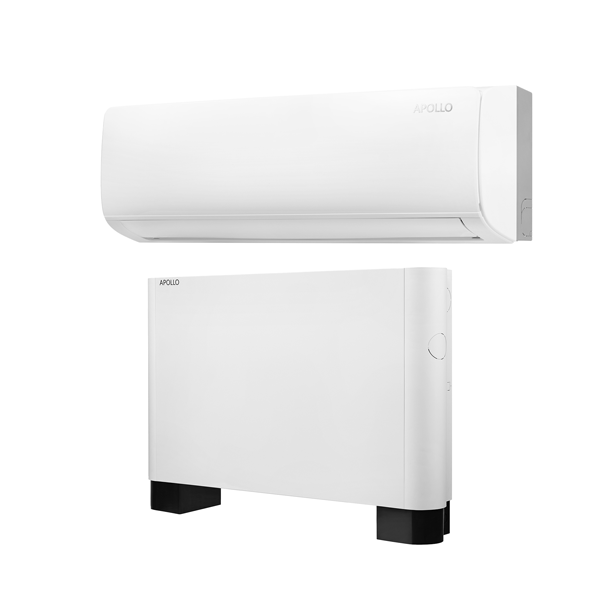
APOLLO Wall-Mounted Fan Coil Unit
Shipping
$165
Free
 Skip to content
Track orders, manage your details, and sign in without a password.

Final Week — Winter Is Coming — 20% OFF Sitewide Free Shipping 00d : 00h : 00m : 00s
HYDRONIC HEATING & COOLING, Built to Last
Hydronic fan coil units for wall, concealed, floor, and ceiling heating and cooling with air-to-water heat pumps, plus heating-only commercial fan coils for hydronic boiler systems.
Heating & cooling | Boiler heating | HVAC fan coils
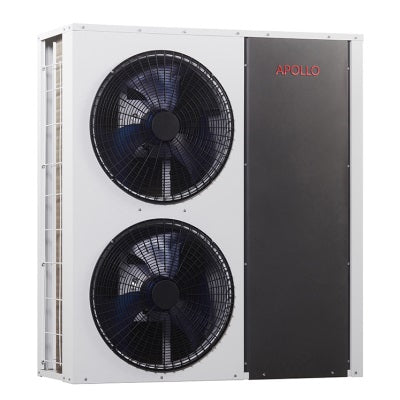
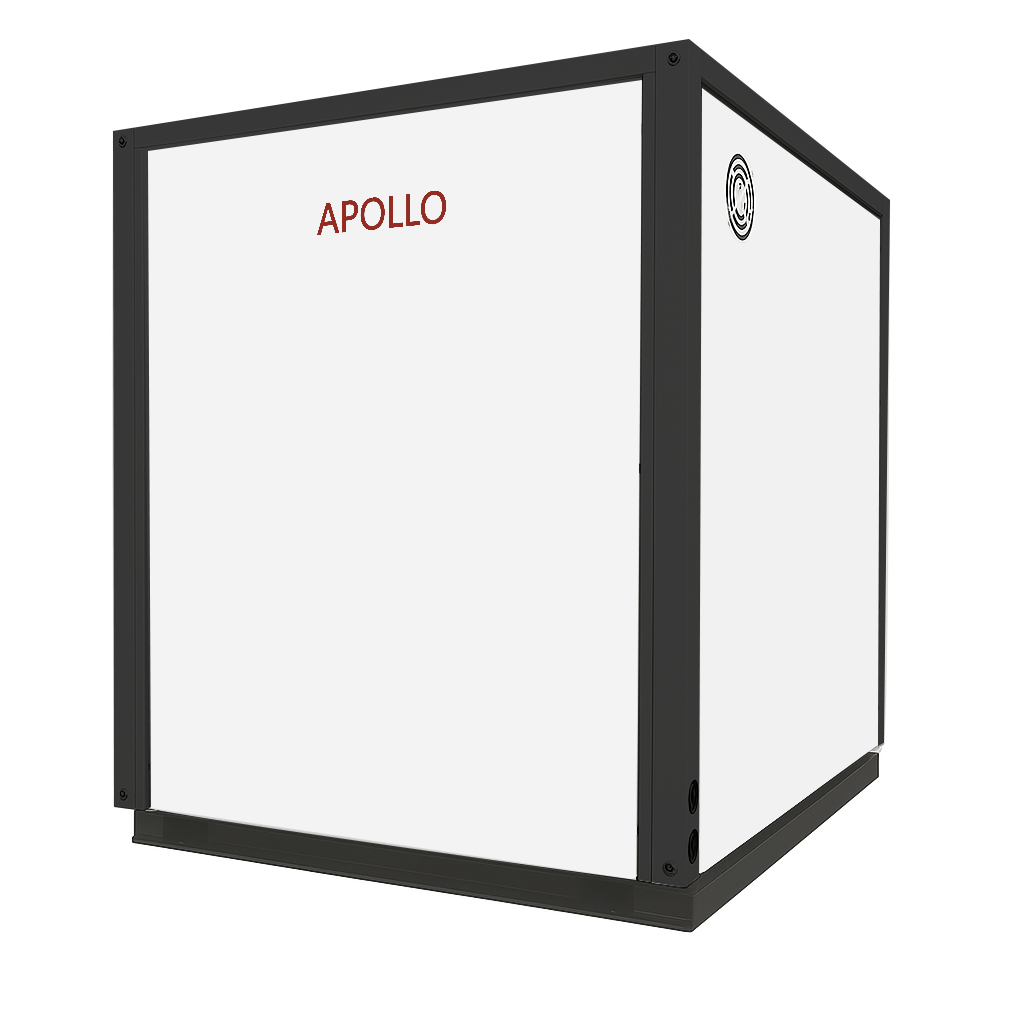
Air-to-water heat pumps extract heat from outdoor air and transfer it into a water loop inside your home. That same loop connects to APOLLO wall-mounted, concealed, floor, and ceiling cassette fan coils. In heating mode, the heat pump sends hot water to each FCU. In cooling mode, it circulates chilled water for zone-by-zone comfort.
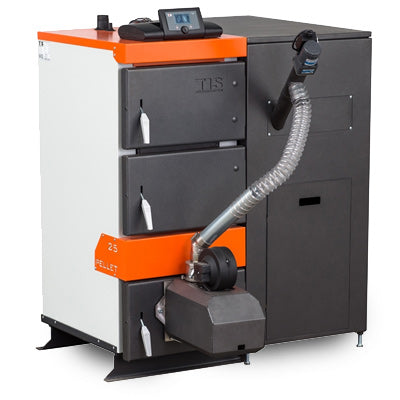
These four heating-and-cooling FCU types are available in selectable 2-pipe and 4-pipe hydronic configurations. The Commercial FCU is a separate heating-only product for standard hydronic boiler and piping systems, designed for large-area space heating and excess boiler heat dissipation.
Wall-mounted, concealed, floor, and ceiling cassette fan coils distribute comfort through water, not refrigerant. A single APOLLO heat pump can feed multiple FCUs through one water loop, without refrigerant lines or a separate outdoor compressor for every zone.
The same heat-pump water loop can also supply radiant floors, domestic hot water, or a pool. Commercial FCUs use the same hydronic heat-transfer principle but connect to boiler systems for heating-only commercial and industrial applications.
The right fan coil depends on where it installs and how visible the unit should be in the finished space.
Need whole-building ducted comfort instead of zone-by-zone units? Air Handling Units (AHU) are a different product category — one central unit distributes heating, cooling, humidification, and dehumidification through ductwork, rather than a fan coil serving a single room.
These selectable configurations apply to APOLLO wall-mounted, concealed, floor, and ceiling cassette FCUs. The heating-only Commercial FCU connects to a hydronic boiler loop and is not part of this heating-and-cooling configuration choice.
2-pipe system
One supply pipe and one return pipe shared by all fan coils. The loop delivers either hot or chilled water at a time, switching seasonally. Simpler to install, with a straightforward hydronic layout for most residential applications where simultaneous heating and cooling across zones is not required.
4-pipe system
Separate hot water and chilled water circuits run to every fan coil. Each unit can heat or cool independently, regardless of season. More flexible for commercial or mixed-use buildings where different zones have different requirements at the same time.
Hydronic fan coil units require significantly less maintenance than refrigerant-based split systems. A few regular checks keep them running efficiently:
Fan Coil Unit FAQ
Direct answers about how hydronic fan coil units work, compatibility with air-to-water heat pumps, system configuration, installation, and maintenance.
A hydronic fan coil unit is a compact terminal heating and cooling device that uses hot or chilled water — not refrigerant — to condition room air. A fan draws room air through a filter and across a water coil; the water heats or cools the air before returning it to the space. Hydronic fan coils connect to a boiler, air-to-water heat pump, or chiller as the water source, and each unit serves one zone independently.
Hot or chilled water is supplied from a central source — typically an air-to-water heat pump, boiler, or chiller — through insulated pipes to each fan coil unit. Inside the unit, a fan pulls room air through a filter and across the water coil. The air exits conditioned back into the room. Each fan coil operates independently, so different rooms can maintain different temperatures.
Wall-mounted, concealed, floor, and ceiling cassette FCUs provide both heating and cooling depending on whether hot or chilled water is supplied. The Commercial FCU is the exception: it is a heating-only unit for hydronic boiler systems and does not provide cooling.
Yes. APOLLO wall-mounted, concealed, floor, and ceiling cassette FCUs connect to air-to-water heat pumps for hydronic heating and cooling and are available in selectable 2-pipe and 4-pipe configurations. The Commercial FCU is a separate heating-only product designed for standard hydronic boiler and piping systems.
A 2-pipe system has one supply pipe and one return pipe shared by all fan coils. The system delivers either hot or chilled water at a time, switching seasonally. A 4-pipe system runs separate hot water and chilled water circuits to each unit, allowing individual zones to heat or cool simultaneously regardless of the season. 2-pipe systems use a simpler hydronic layout; 4-pipe systems offer greater flexibility for commercial or mixed-use buildings.
The choice depends on installation location, ceiling access, and how visible you want the unit to be. Wall-mounted units are the most straightforward. Floor units work well below windows in retrofit situations where ceiling access is limited. Ceiling cassettes suit open-plan rooms with central ceiling access. Concealed ducted units go inside a ceiling or wall cavity and are invisible after installation. For larger spaces or commercial applications, the commercial FCU or central AHU may be more appropriate.
Fan coil units need periodic filter cleaning or replacement every 1–3 months, clear airflow paths around supply grilles and return openings, and an annual inspection of the condensate drain pan and line when used for cooling. Check water connections and thermostat settings at the start of each season. They require significantly less maintenance than refrigerant-based split systems.
A fan coil unit is a compact, room-level terminal device that conditions one zone. An air handling unit (AHU) is a central system that conditions and distributes air for an entire building or a large section of it, typically through a duct network. MBTEK's APOLLO Central AHU is designed for whole-building hydronic air handling, while the FCU lineup covers individual room and zone applications.
Wall-mounted, floor, ceiling cassette, and Commercial FCUs discharge air directly and do not require a central duct network. Concealed FCUs are the exception: they use short supply and return ducts or an outlet plenum for local zone distribution. Piping, condensate drainage, electrical supply, and control requirements vary by FCU type.
The number depends on the heat pump's output capacity and the individual heating and cooling loads of each zone. A single APOLLO heat pump serves multiple zones through one shared water loop — each fan coil draws from that loop independently. The right answer for your project comes from a load calculation that accounts for room size, insulation, windows, climate, and required water temperature. MBTEK's system builder can help size your system.
Wall-mounted, concealed, floor, and ceiling cassette FCUs cool and dehumidify when supplied with chilled water. Warm room air passes across the chilled coil, moisture condenses, and the condensate drains away. The Commercial FCU is heating-only and does not provide cooling or dehumidification.
The key difference is what carries the energy inside your home. Refrigerant-based systems run refrigerant lines from an outdoor unit to each indoor head. With hydronic fan coils, a single outdoor heat pump produces hot or chilled water and distributes it through standard insulated water pipes — one heat pump serves every zone. There are no refrigerant lines inside the building and no outdoor compressor per room. The same water loop can also supply radiant floors, domestic hot water, or a pool, which a refrigerant-only system cannot do. For multi-zone projects, this typically means fewer outdoor units, less refrigerant, and a simpler installation overall.